Building a “Regional Knowledge Network”: Perspectives From the Mekong Forum 2026
This piece reflects on the Mekong Forum 2026 in Bangkok, Thailand. The forum explored nexus thinking since complex regional challenges cannot be solved by individual sectors or organizations.
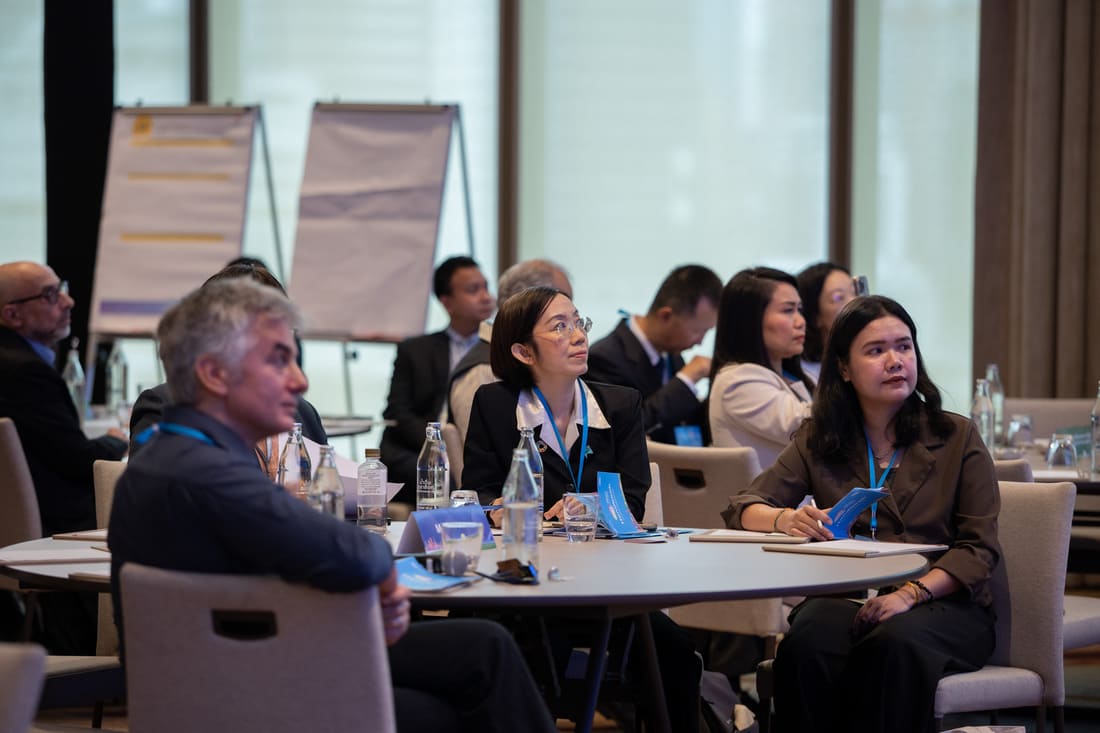
394_20260824_01__Photo_Mekong_Institute
Photo: Mekong Institute
This piece reflects on the Mekong Forum 2026 in Bangkok, Thailand. The forum brought together partners and collaborators from across the Mekong Region and beyond to share information, experience and ideas on regional collaboration. The forum explored nexus thinking since complex regional challenges cannot be solved by individual sectors or organizations.
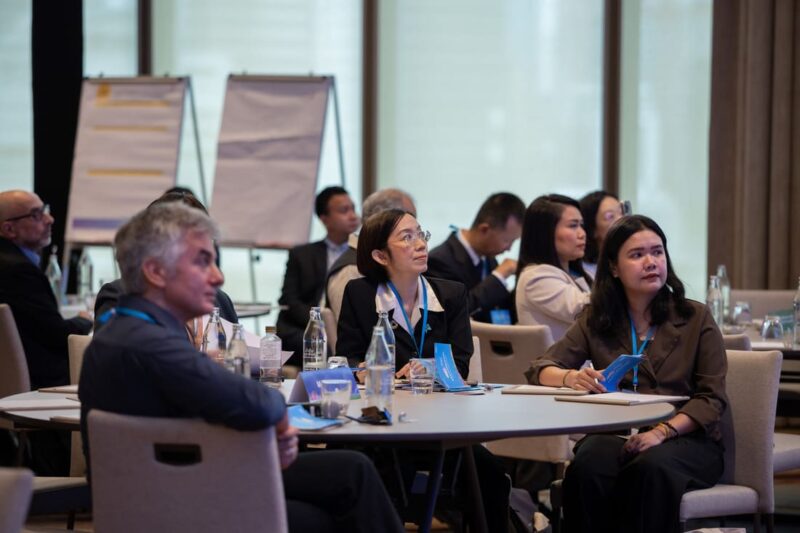
Photo: Mekong Institute
The challenges we face are interconnected
The Mekong Region is confronting a new set of intertwined challenges. Climate change, water insecurity, food systems, energy transitions, infrastructure development and livelihoods are now more deeply connected than ever. Yet, the institutions tasked to handle these challenges remain largely organized around sectoral mandates and administrative boundaries. The goal, therefore, is not only to generate more knowledge but also to connect information across industries and countries. And critically, turn it into policy and action.
Capturing this sentiment, Dr. Romyen Kosaikanont, Vice President/Lecturer in Economics Programme, Mae Fah Luang University, stated:
We are living in a dimensional world. We are facing various climate change issues together. Not a single country alone should address this; we all have to tackle it together.
She noted that climate change simultaneously affects agriculture, water availability, energy systems, infrastructure and livelihoods. Decisions in one sector often have ripple effects in others: agricultural development may impact water supplies; infrastructure projects can affect ecosystems and communities; and energy choices influence economic development and environmental outcomes.
These insights were highlighted at the Mekong Forum’s Technical Session 2, “From Knowledge to Nexus Solutions: Driving Innovation and Policy Impact Through the GMS Knowledge Network.” The discussion underscored the need to construct regional knowledge networks that enable more adaptive, evidence-based and collaborative development across the region.
From knowledge creation to policy and action
One of the main themes that emerged was that knowledge production should not be an end in itself. While policy depends on facts and data, translating evidence into actionable policy remains a challenge.
Mr. Boualom Saysanavong, Deputy Director General, Department of Policy, Planning and Evaluation, Ministry of Industry and Commerce, Lao PDR, identified key barriers, including inadequate institutional capacity, difficulties in gathering and integrating information across sectors, and translating research into tangible policy suggestions. He said this raises a critical question:
How can we ensure research meets genuine policy demands, and that policymakers can effectively use it?
A robust knowledge network can help close this gap. Rather than treating researchers and policymakers as separate communities, a regional knowledge network can bring them together throughout the knowledge process. Policymakers can articulate the challenges and evidence gaps they face, while researchers provide analysis, data and possible solutions. The private sector, universities and other stakeholders can provide additional expertise and skills.
The forum underlined the importance of the “Greater Mekong Subregion (GMS) Knowledge Network” which can be more than a repository for sharing reports and an active platform dfor collaboration and impact.
Trust, inclusion and continuity are needed in knowledge networks
Building a knowledge network is not simply about developing another regional platform. Networks are meaningful only if relationships are long-lasting.
Mr. Souvanthong Namvong, Deputy Director General, Department of Agricultural Extension and Cooperatives, Ministry of Agriculture and Environment, Lao PDR & Chairperson, Mekong Extension and Learning Alliance, said:
To build a strong regional knowledge network, we need long-term friendship, trust and continuous learning. Knowledge must not be single or exclusive, it must be accessible, inclusive and shared so that we can learn from each other and turn collective knowledge into meaningful action.
He also cited unstable funding, poor communication between diverse parties and insufficient infrastructure as obstacles to the long-term sustainability of networks. To address those, he recommended expanding national centers, investing in digital knowledge infrastructure, securing long-term funding, and creating more opportunities for face-to-face exchange.
From fragmented projects to a connected regional network
What the Mekong Region needs is not another collection of stand-alone projects but stronger links between the knowledge that already exists.
The key messages of the forum made this clear: the region must shift from fragmented attempts towards practical regional cooperation, using existing platforms in a more strategic way. The aim is not simply to create new organizations but to improve coordination, build trust and begin with targeted topics where cooperation may deliver concrete outcomes.
A strong GMS Knowledge Network can play this connecting role. It can help identify shared regional priorities, link evidence to decision-making, enable peer learning, and create paths for research to influence implementation.
Ultimately, success should not be defined by the number of papers written or meetings organized, it should be assessed by whether knowledge helps us make better decisions, work more effectively together and bring about actual benefits in people’s lives.
Mr. Vo Tran Trung Nhan, Program Manager ofSustainable Mekong Research Network (SUEMRNET) hosted by the Stockholm Environment Institute (SEI) Asia Centre, said,
We do not stop at manuscripts or publications. We have to push forward research into policymaking and implementation, ensuring balance between academic and policy relevance.
He stressed that knowledge production must be inclusive from beginning to end.
Bridging knowledge for the Mekong’s future
The future of the Mekong Region depends on institutions that can learn, adapt and cooperate across boundaries. As the Mekong Forum concluded, the region needs to shift from isolated initiatives to integrated systems, from sector-based planning to nexus approaches, and toward stronger regional innovation and knowledge ecosystems. The forum participants viewed the building and expanding of a “Greater Mekong Knowledge Network” as a crucial part of this transformation.
Nexus thinking begins with the understanding that our problems are interconnected. The first step is to identify those connections. The next is to develop the relationships and institutions that enable us to respond collectively.
A knowledge network may bridge that gap for the Mekong Region: linking evidence and policy, researchers to decision-makers, national experiences to regional solutions, and information and action.
The goal is not simply more knowledge. It is about connecting what we know, learning together, and turning knowledge into collective action. This is how the Mekong Region can translate research into real impact on the ground.
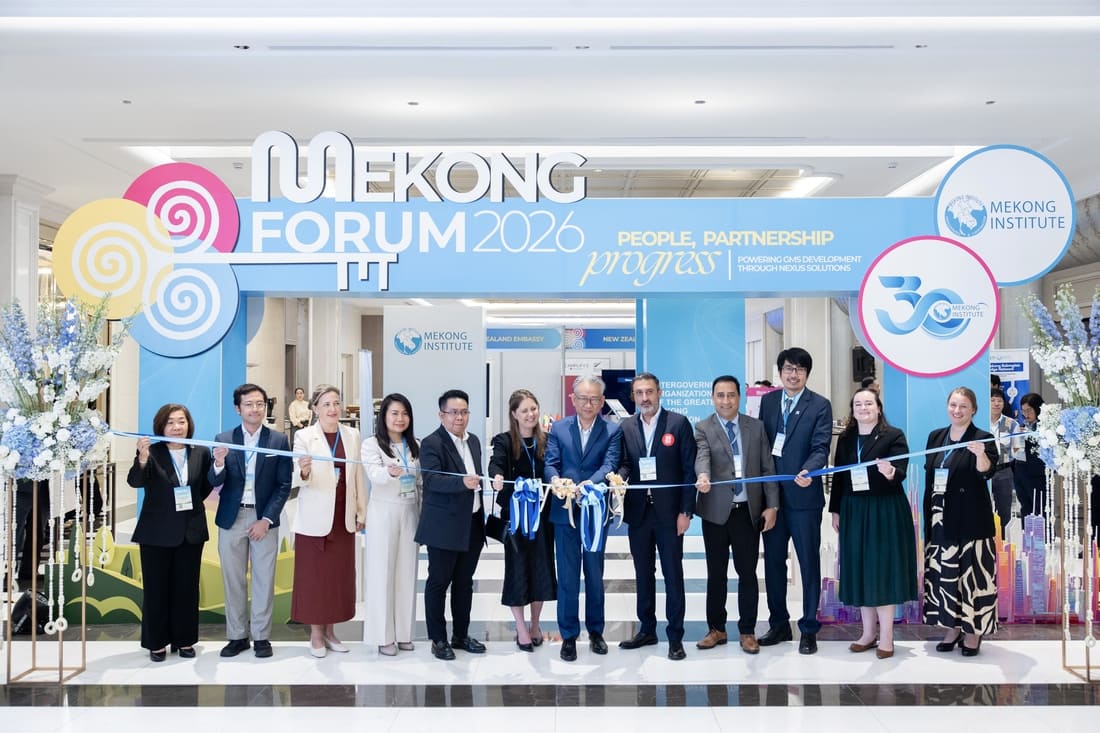
Photo: Mekong Institute
Note: This piece is based on reflection from the Mekong Forum 2026, held in Bangkok, 22-23 July 2026. The forum brought together partners and collaborators from across the Mekong Region and beyond to share information, experience and ideas on regional collaboration. The forum explored nexus thinking since complex regional challenges cannot be solved by individual sectors or organizations.