From skepticism to action: Savannakhet farmers embrace carbon credit scheme
Produced by the MTT media-research collaboration fellowships 2025, this article explores how Lao rice farmers are embracing sustainable agriculture to generate carbon credits.
 By Keoxomphou Sakdavong
-
Mar 17, 2026
By Keoxomphou Sakdavong
-
Mar 17, 2026
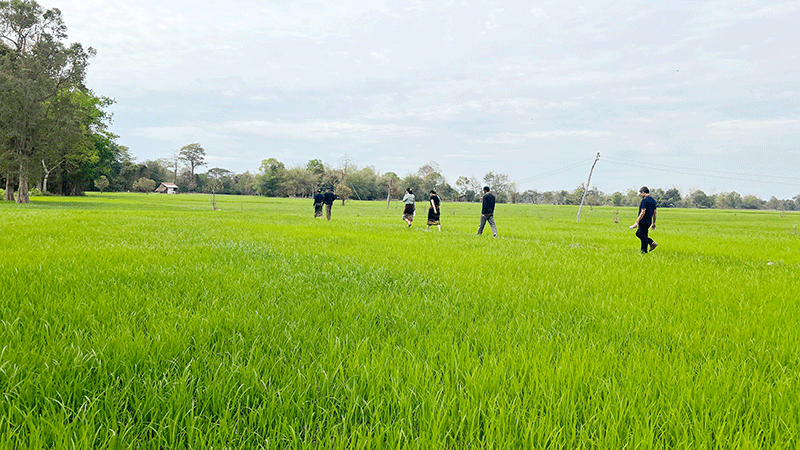
How do we actually sell carbon credits? Do we have to put the air from our rice fields into a tube and sell it?” a farmer in Champhon district, Savannakhet province, named Ms. Nang, asked with a hearty chuckle. Her question is typical of most people’s reaction to carbon credit trading, a concept so new in Laos that it baffles educated city dwellers, let alone those in rural villages who continue to engage in age-old traditions. Nang was not the only person to misunderstand the concept; her reaction was shared by most of the people in her village when they were introduced to the scheme. The slender plastic tubes they were shown only added to the mystery, leading to the amusing misconception about selling “rice field air”.
However, in the quiet fields of Xaybouly and Champhon districts, rice farmers are on the frontline of a pioneering carbon credit initiative, transforming skepticism into a powerful local force for national and international climate resilience.
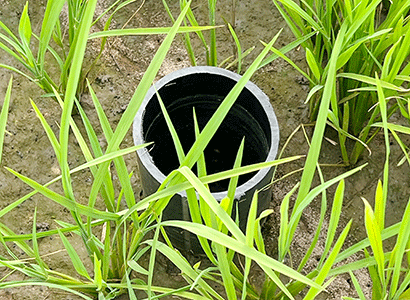
A tube is inserted into the ground to monitor the underground water level. The rice is not submerged in water but the ground still has sufficient moisture, in line with the Alternate Wetting and Drying method.
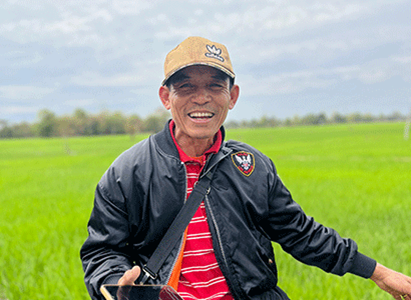
Mr. Inpong, a farmer in Xaybouly district, Savannakhet province, talks about the Alternate Wetting and Drying practice used for carbon credit sale.
A few months ago, I accompanied a team on a visit to the two districts in Savannakhet province, observing a sight that defied conventional wisdom. Farmers were inserting plastic tubes deep into seemingly dry rice fields, not to irrigate, but to monitor. This deliberate drying of fields, known as “Alternate Wetting and Drying”, is a scientifically proven method to reduce methane emissions – a potent greenhouse gas – that arise from rice cultivation. This innovative practice forms the core of a new carbon credit sale contract with a foreign entity, marking a significant departure from traditional farming. The tubes, far from collecting “air”, serve as critical monitors of underground water levels, ensuring the rice receives just enough moisture to thrive while minimising the time it spends submerged in water. This precise water management is key to cutting down on harmful gas emissions. This new approach to their age-old practice was initially met with disbelief on the part of villagers.
“When the project team explained the system and we started putting it into practice, we then started to understand it better,” Nang said, highlighting the importance of persistent engagement and education. A researcher and key figure behind the project, Ms Oulavanh Sinsamphanh, acknowledged the challenges. “This is an innovative scheme and it’s quite hard to get people to understand what we’re trying to do and participate. But we are trying hard and have shown them how they can benefit.”
While the exact carbon credit payments are still being calculated on an annual basis, Ms. Oulavanh is optimistic. “As we have only just started, the calculations concerning carbon credits have not been worked out in detail yet. But when the villagers receive some payments, I’m sure more people will want to participate.” The benefits extend beyond potential future payments and rice growers are already experiencing tangible improvements in their daily lives. “The villagers not only earn money from the sale of carbon credit; they also save money on buying water for their rice fields in the dry season,” Ms. Oulavanh said. By regulating water use, the Alternate Wetting and Drying practice reduces the need for constant irrigation, which is a significant cost saving, especially in areas prone to drought like Savannakhet.
“I’m happy to be involved in the project,” said Mr. Inpong, a farmer in Saybouly district. “Traditionally, we always have water in our rice fields, but this new system is good. Even though we don’t have water in the fields on some days, the rice keeps on growing and we save money on water.” This grassroots initiative is not an isolated effort. It’s part of a national strategy to position Laos as a significant player in the global carbon market. The project is a collaboration with an Indian company, leveraging international demand for carbon credits. As Ms. Oulavanh says, “The carbon credit market is quite large internationally as developing and developed nations, and major corporates, have agreed to buy carbon credits from countries as part of their social business responsibilities.”
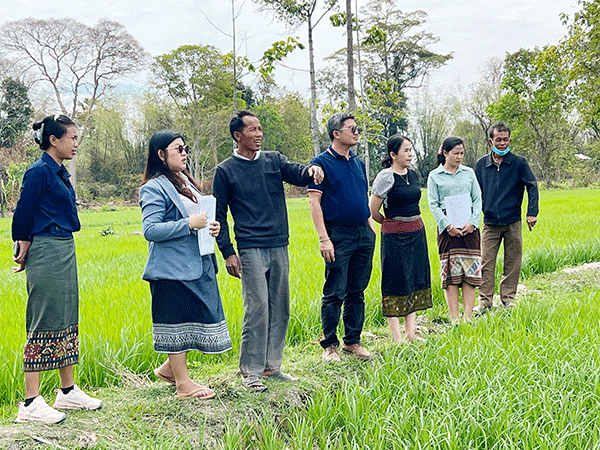
Ms. Oulavanh meets with farmers in Savannkhet province to ensure that practices are based on local preferences.
The Lao government has been building a robust framework to facilitate such initiatives by issuing decrees such as the Forest Carbon Management and most recently the Carbon Credit decree, laying the legal groundwork for managing carbon markets, attracting investment, and ensuring fair benefit-sharing from carbon sequestration activities. While forestry remains the cornerstone of the scheme, Laos is increasingly exploring carbon credit opportunities in its energy and agriculture sectors, demonstrating a holistic approach to sustainable development. The journey experienced by the Savannakhet rice farmers embodies the spirit of this transformation. From initial bewilderment about “selling air”, they are now active participants in a global effort to combat climate change. Their willingness to adapt traditional practices, learn new methods, and embrace scientific innovation showcases the incredible potential of local communities to drive wider impacts.
This article is produced through the Media-Research Partnership Fund coordinated by SEI Asia with the generous support of DFAT, Government of Australia.
By Keoxomphou Sakdavong
(Latest Update July 9, 2025)
This story was written by Keoxomphou Sakdavong as a part of S MTT media-research collaboration fellowship and was published in Vientiane Times: From skepticism to action: Savannakhet farmers embrace carbon credit scheme
-------------------------
MTT media-research collaboration fellowship
In January 2025, SEI’s Mekong Thought Leadership and Think Tanks Network Program (MTT) awarded six “media-research collaboration fellowships”, each worth up to US$ 3,400 (AUD 5,000), to selected journalists and multimedia producers from the countries of the Mekong Region for environmental reporting.
During the fellowship from January to December 2025, the media grantees have produced a range of stories, blogs, and short films on diverse environmental issues in the Mekong Region. The outputs were produced in collaboration with the MTT-affiliated researchers in the Mekong Region. The media grantees also organized a series of trainings and collaborative learning sessions for the MTT researchers in order to build the researchers’ capacity in multimedia and media engagement.
The media-research partnership fund is coordinated by SEI Asia with the generous support of DFAT, Government of Australia.
 Read more about SUMERNET
