Community-based Initiatives and multi-stakeholder approach: Key to addressing climate change for rural communities in Cambodia
Produced by the MTT media-research collaboration fellowships 2025, this article discusses the necessity of a community-based, inclusive, and well-funded approach, integrating technical expertise, to effectively address the impacts of climate change in rural Cambodia.
 By Eung Sea
-
Mar 18, 2026
By Eung Sea
-
Mar 18, 2026
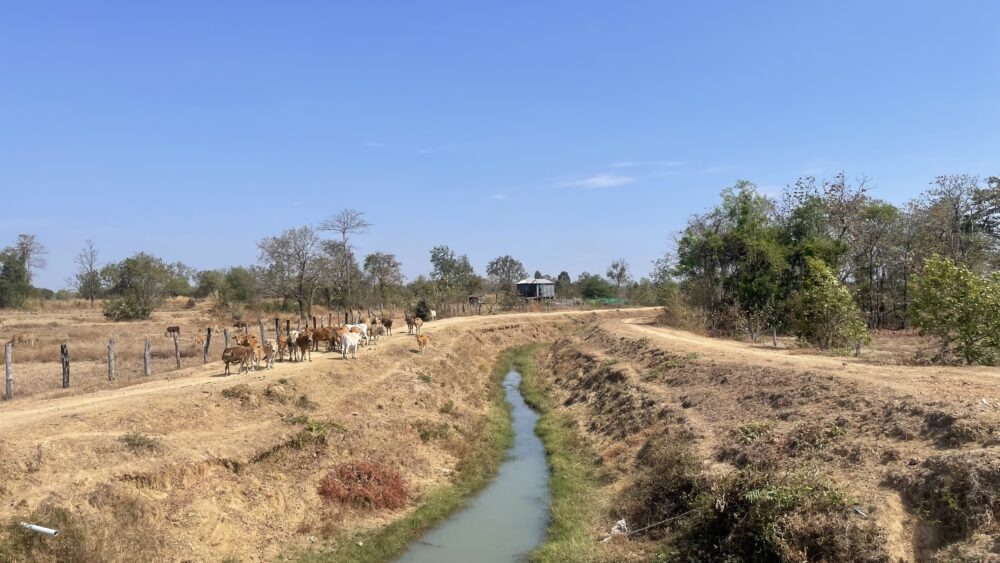
STUNG TRENG, CAMBODIA—Led by a team of researchers from My Village Organization (MVi), a project was implemented and aimed to empower marginalized groups who take the brunt of climate change disasters along Mekong River to co-create disaster risk management plans, leveraging a multi stakeholder platform that brings together local leaders, NGOs, and government agencies by building local communities’ resilience and ensuring local planning includes a community resilience with water-energy-climate nexus approach.
Researchers have found that indigenous groups also face heightened vulnerability, with all five surveyed villages experiencing climate change impacts. Local administrations lack budgets for climate adaptation as well as water-energy-climate nexus analyses and gender-inclusive strategies — further hindering holistic resilience planning. Addressing these gaps is critical to developing equitable, long-term solutions for climate-affected communities.
Kry Solany, a researcher who led the project, said MiV used Gender Equality, Disability & Social Inclusion(GEDSI) approach during the project implementation for “benefit to all the marginalized groups” including women, youths, people with disabilities, indigenous people, LGBTQI, and widows.
“[We aim] to increase understanding on marginalized community’s resilience (women, men, youths, people with disabilities, GLBTs and people from poor families) to climate change with water-energy-climate nexus approach with identified solutions for climate change among decision-makers and policy-makers at sub-national and national levels,” he says...
Click here to continue reading.
This story was written by Eung Sea as a part of MTT media-research collaboration fellowship and was published in CamboJA News: Community-based Initiatives and Multi-Stakeholder Approach: Key to Addressing Climate Change for Rural Communities in Cambodia
-------------------------
MTT media-research collaboration fellowship
In January 2025, SEI’s Mekong Thought Leadership and Think Tanks Network Program (MTT) awarded six “media-research collaboration fellowships”, each worth up to US$ 3,400 (AUD 5,000), to selected journalists and multimedia producers from the countries of the Mekong Region for environmental reporting.
During the fellowship from January to December 2025, the media grantees have produced a range of stories, blogs, and short films on diverse environmental issues in the Mekong Region. The outputs were produced in collaboration with the MTT-affiliated researchers in the Mekong Region. The media grantees also organized a series of trainings and collaborative learning sessions for the MTT researchers in order to build the researchers’ capacity in multimedia and media engagement.
The media-research partnership fund is coordinated by SEI Asia with the generous support of DFAT, Government of Australia.
 Read more about SUMERNET
