Groundwater scarcity drives Siem Reap hotels, temples and farmers to compete
Amidst drought, infrastructure issues and uneven regulations, farming communities lack water access, while hotels and the Angkor temples meet their needs.

 By
By

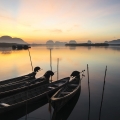
The pools surrounding the Angkor Wat not only provide excellent opportunities for sunrise reflection photos, but also are essential for keeping the world wonder standing.
The Angkor Archaeological Park’s system of ancient reservoirs and channels stabilise the temples built atop sandy soil and groundwater underneath provide additional support.
For the hundreds of families living within and around the forests of the Angkor temple complex, use of this water is restricted by the Authority for the Protection of the Site and Management of the Region of Angkor (APSARA).
“The temple could collapse if you do not have enough groundwater,” said Phoeurn Sokhim of the APSARA water management department. “Most of the big temples depend on the groundwater as the foundation.”
Yet there is not enough groundwater to meet competing needs in and around the city, nor is there currently sufficient surface water storage from rivers, lakes and reservoirs to provide an alternative, local authorities and researchers say. Most communities and businesses around Siem Reap depend on groundwater.
Read more here:
This article was written by Jack Brook and Choulay Mech as part of the SUMERNET media grants and was published in Southeast Asia Globe.
Info
This story is part of the following project
SUMERNET 4 All: Engaging with water insecurity in the Mekong Region
Topic
Country
Related people
You might be interested in
-
SUMERNET Vision Guide introducing the new phase "SUMERNET 4 All"
The new, revised "Vision Guide" for SUMERNET is now available. This vision guide presents an overview of SUMERNET - its origins and governance structure, background to the network, aims, key research areas, engagement with policy, and outreach products
![SUMERNET Vision Guide introducing the new phase "SUMERNET 4 All"]()
-
SUMERNET 4 All Call for Proposals on Joint Action
SUMERNET 4 All (S4A) provides financial support and technical assistance to consortia of researchers and boundary partners from the Mekong Region
![SUMERNET 4 All Call for Proposals on Joint Action]()
-
SUMERNET launches redesigned website to provide a fresh visual look and direction
SUMERNET is proud to announce the launch of our redesigned website to coincide with our new phase of work on addressing water insecurity in the Mekong Region.
![SUMERNET launches redesigned website to provide a fresh visual look and direction]()

 Read more about SUMERNET
