Insights into driving regional research towards policy change
Researchers are evolving into "change agents" by bridging the gap between raw scientific data and real-world impact to drive meaningful, life-changing policy shifts across the Mekong Region.
 By Nittayapond Nipatsant
-
Apr 1, 2026
By Nittayapond Nipatsant
-
Apr 1, 2026
On 19-20 February 2026, policy-level representatives from Thailand and Laos, provincial and city-level officials, researchers, and local community members came together to reflect on key insights gained in the Knowledge Exchange Meeting on Solutions and Opportunities in Managing Water Storage to Reduce Transboundary Water-related Risks and Address Multiple Water Demands (SOS) project.
SOS aims to strengthen regional cooperation and establish a shared framework for managing water storage that reduces transboundary disaster risks while ensuring that benefits reach marginalized and vulnerable groups through GEDSI and Nature-Based Solutions (NBS).
The knowledge exchange allowed participants to validate research findings, co-design a joint concept note for a five-year implementation plan, and engage in practical learning through field visits. The participants observed firsthand the various disaster risk reduction and integrated water management strategies.
Currently, the challenges facing the Mekong Region are too complex for academic theories or textbooks to solve alone. The Mekong River is a ‘living ecosystem’ that connects cross-border economies and supports the livelihoods of millions of people in the region.
As Prof. Dr. Yanyong Inmuong from Maha Sarakham University said:
Research must move beyond ‘research for knowledge’ to ‘research for policy interface.’ This change is crucial to bridge raw scientific data into actionable policies that can provide tangible improvements to the quality of life of local communities.
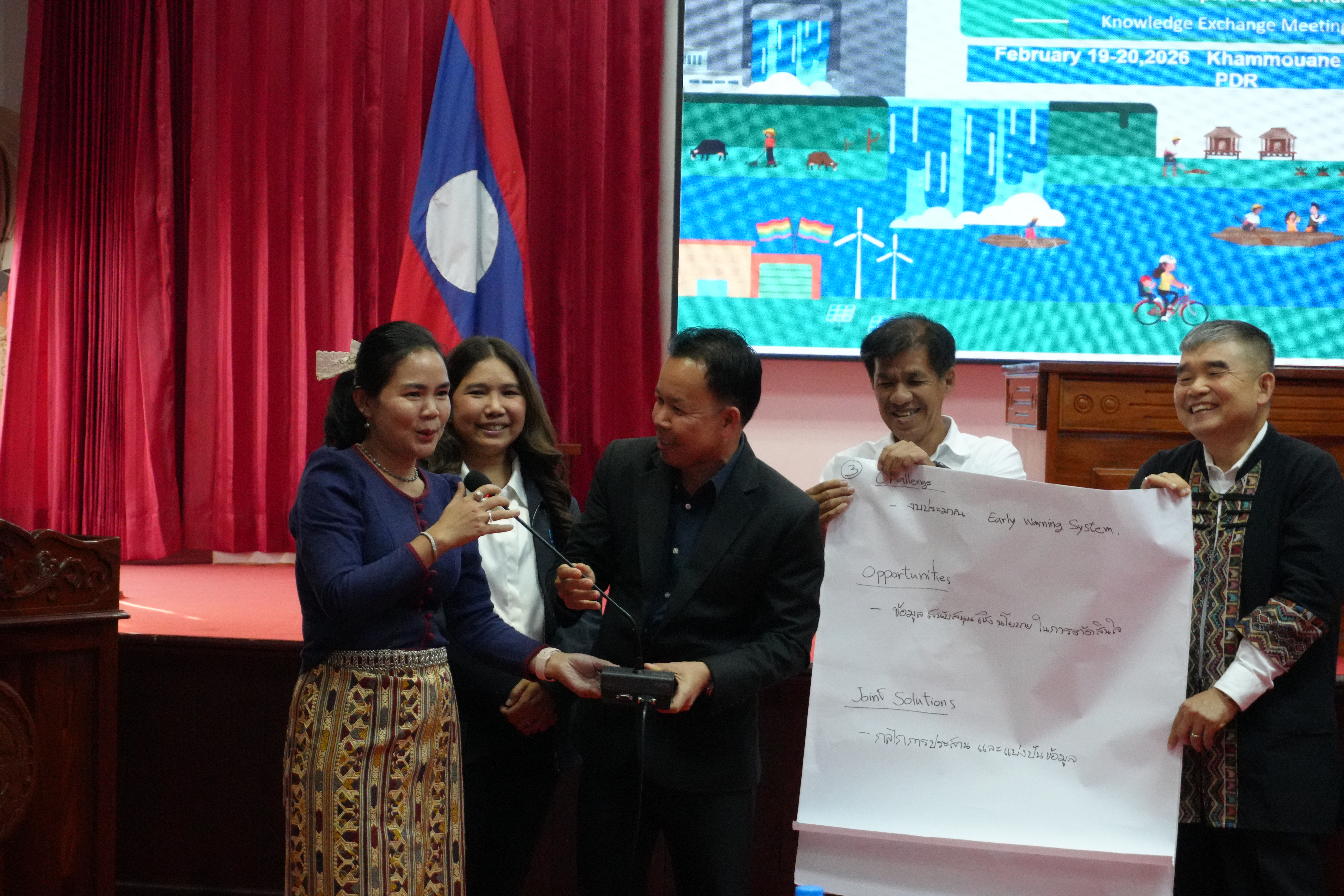
Brainstorming activity to share insights and find solutions for climate change and water management in the Mekong region. Photo: Nittayapond Nipatsant.
Redefining research in times of change
The core principle of the ‘research to policy interface’ approach is that it’s not just about producing an academic report, but about the process of using researchers’ findings to “catalyse” solutions by policymakers. While traditional research for knowledge may seek to produce publications, research to drive policy prioritizes “impact” on the people and the environment.
This needs a change in the mindset of researchers towards becoming agents of change through the following key principles:
- From interest-based to needs-based: Shifting from research based on personal academic interests to exploring the wider needs of the area and the goals of policymakers.
- From field data to impact-based data: Focusing on how research findings can improve lives, rather than only theoretical validation.
- From academics to a “bridge” connecting knowledge: Researchers must act as intermediaries, translating technical or academic language into actionable solutions that can be taken up in local, national and regional development plans and strategies.
Linking research findings to actionable policy
Accurate data is only the starting point. The ‘art of communication’ and a strategic approach to engage with policymakers will help create impacts. An effective strategy requires the systematic use of both formal and informal mechanisms
The strategies for reaching policy makers include (1) Informal contact: this is the first approach to build trust and inform decision-making, reducing barriers between researchers and policymakers. For example, having initial direct conversations with the director of the hydropower station or the provincial governor to present research findings highlighting urgent problems in the local area. 2) Formal contact to provide ‘empirical evidence’ and create a paper trail within the bureaucratic system. This step may involve preparing a short summary, policy brief or a report, written in non-complex language without technical jargon, summarizing recommendations and steps for policy action, that can be submitted at a workshop or through official channels.
As Dr. Yanyong explained: “High-level government officers or policymakers tend to ‘ignore’ if researchers present textbooks or theories. But they are immediately ‘open’ to receiving empirical data on real problems in the area. For instance, instead of discussing vulnerability theoretically, clearly state, ‘How many households are affected?’ or ‘How many young people face social problems due to water management?’
He emphasized:
Data that reflects the painful reality on the ground is the most powerful persuasive tool to reach policymakers.
The power of partnerships and shared values for building trust
Sustainable cooperation is not based solely on monetary ‘shared benefits’ but also on ‘shared values.’ These values are deep-seated, such as the aspiration to see villagers have a better life or the joint effort to maintain food security and the biodiversity in a reservoir.
When researchers, communities, and government agencies find common ground, trust is strengthened. This trust-building can create powerful and unexpected policy-making networks.
For example, Ms.Jiraporn Berkbandee, Provincial secretary in Sakon Nakhon province transcended her administrative role to become a key figure in coordinating with the governor after she participated in the dialogue with researchers and gained insights into her area. Another Ms. Chularat Phaophol, resort owner in the Nam Pung Dam area volunteered to lead resource management initiatives because she recognized that the impact on her community was also her own.
Ms. Chularat Phaophol, the resort owner in the Nam Pung Dam area said: “After joining the project, I became aware of the chemical pollution in the Nam Pung dam. My community has been directly affected. I created a shared understanding of the impacts of using chemicals and pesticides for farming among people upstream and downstream of the dam. I also connected the relevant government agencies to participate in raising awareness and supporting behavioral changes in farming. I wanted to ensure that all the water-users of the Nam Pung dam can have access to safe water for drinking and farming.”
Opening ‘dialogue’ spaces where all parties can come together to learn and develop common values is a powerful policy tool, more potent than any research report alone.
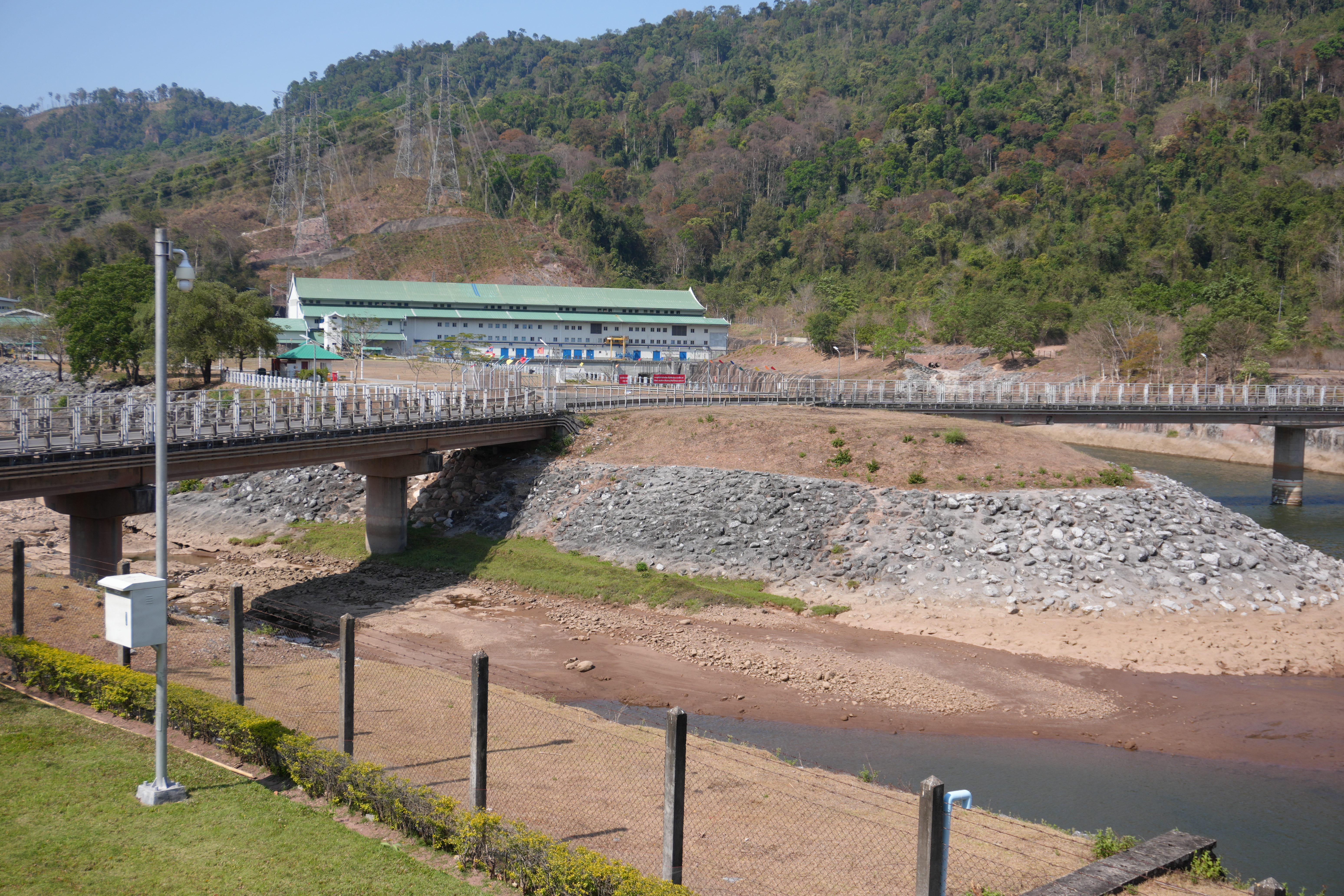
 Learning about Hydroelectric Operations, Environmental & Conservation Management and Dam Community & Resettlement Programs at Nam Thuen 2 Welcome Center. Photo: Nittayapond Nipatsant.
The Next Step: Researchers as change agents
It is clear that being a researcher today requires more than just conducting research. Researchers must be ‘leaders of change,’ bridging the gap between knowledge and policy.
This involves identifying missing links by designing critical data collection methods in social dimensions often overlooked by technical experts. This data can then be used to ‘fill the gaps’ for policymakers and decisionmakers, particularly utilizing household-level or field-based data, which can often be more persuasive than just scientific theory.
Once local-level changes begin to show results, these case studies can be used as a basis for organizing ‘synthesis forums.’ By inviting senior policymakers such as director-generals, permanent secretaries, and ministers to participate in analysis of the impacts or policy solutions, researchers can expand the impact from a bottom-up approach to reshaping national and regional policies.
 Read more about SUMERNET
