Bridging the divide: How diverse Mekong youth are building environmental sustainability
This year’s Mekong Environmental Resilience Week (MERW) continued to spotlight the roles of Mekong youth as key agents of change.

 By
By
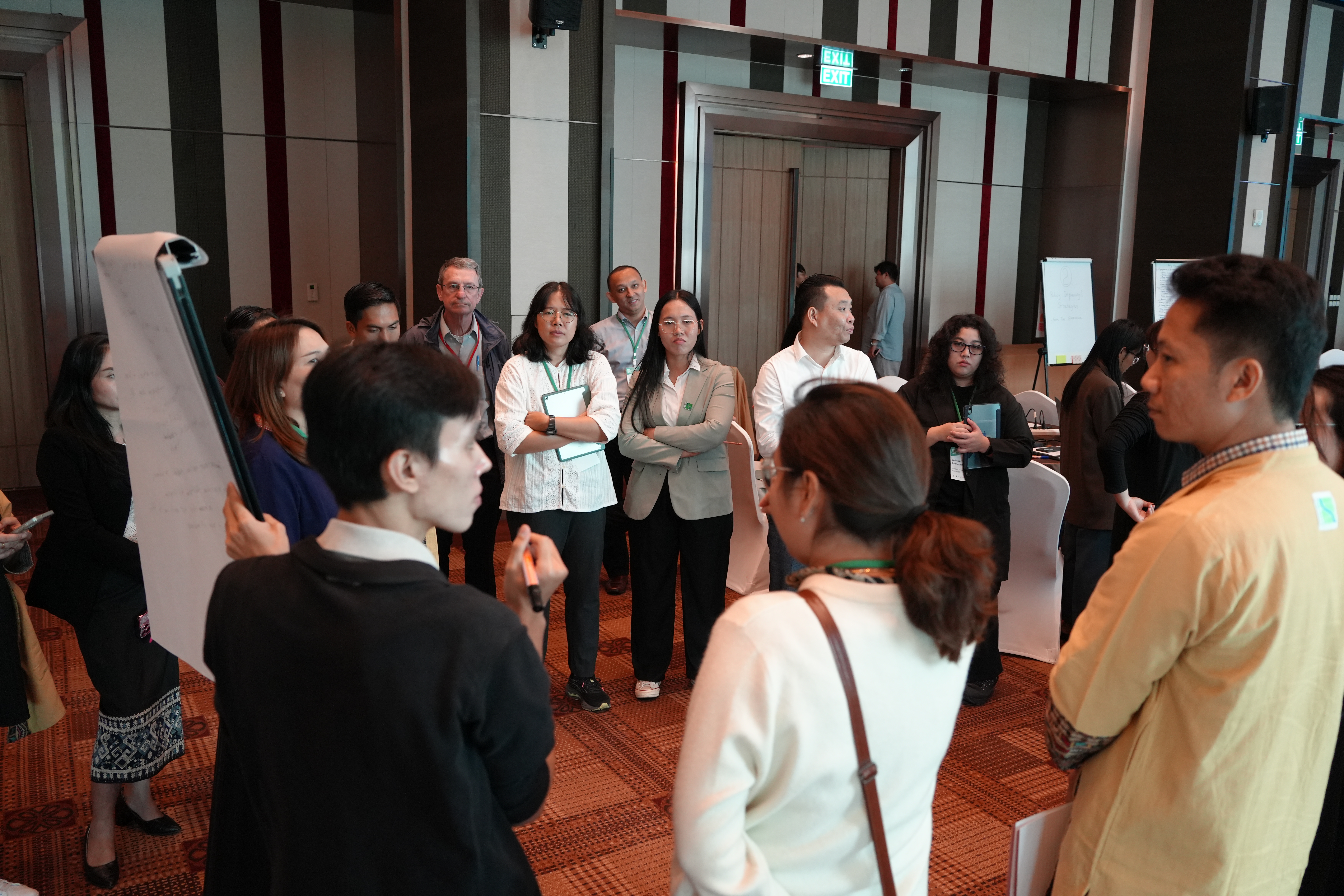
At the panel discussion, “Forward looking opportunities for Think Tanks to shape policy and practice on the Water, Energy, and Climate Nexus in the Mekong Region,” two young professionals – Eung Sea, a journalist with the MTT Media-Research Partnership and Panitda Saiyarod, MTT Fellow from the National University of Laos – reflected on lessons learned and forward-looking solutions. The event also welcomed five passionate new MTT fellows from diverse backgrounds, united by one commitment: to contribute to a resilient future for the Mekong Region.
Solving interconnected issues needs diverse perspectives
During the panel, Panitda, who has a background in anthropology, reflected on her experiences as a research fellow doing field-based research in Laos. A 10-day field study on water storage management allowed her to hear firsthand from communities about limited water access and women’s safety concerns near hydropower dams. She sees this community-centred approach as a powerful entry point for making policies more grounded and inclusive.
Eung added that marginalized groups are often hardest hit by climate change, hydropower impacts, droughts, and floods while there is widespread misinformation in the daily news. As a journalist, he emphasized how the media can play a key role in amplifying diverse voices and reporting accurate and accessible information on water, energy, and climate issues.
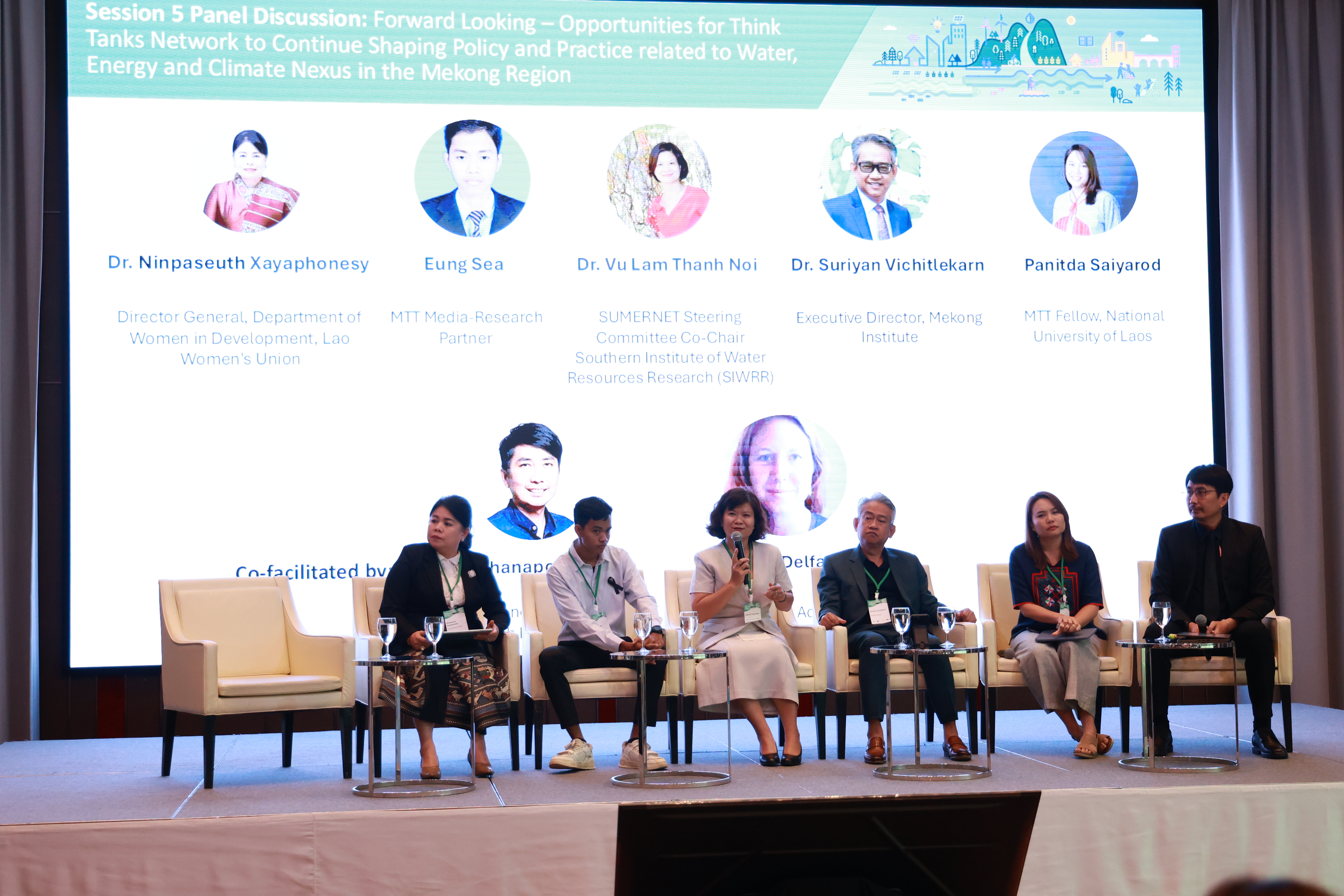
Forward looking opportunities for Think Thanks to shape policy and practice on the Water, Energy, and Climate Nexus in the Mekong Region. Photo: Wichai Juntavaro.
Climate change and water insecurity were also top of the agenda for the new MTT Fellows (Batch 5) that motivated them to join the program.
Leangkim Kong, MTT fellow from Vietnam, pointed out that climate change is worsening environmental problems in the Mekong River. Kong, who has a background in environmental assessment, said:
This is particularly true for Vietnam, as the most downstream country in the region, which shoulders the burden of impacts much more than the upstream countries.
Coming from a background in community studies and poverty reduction, Nittayapond Nipatsant highlighted how the many social, economic, and environmental challenges in the region are complex and interconnected.
The interconnectedness of the issues was also emphasized by Xayalak Vilaida, another new MTT fellow. Drawing on his experience in the energy sector, he aims to produce research using the Water-Energy-Climate nexus approach to solving the problems.
Suchanad Boonyachai, with a background in landscape architecture, agreed on the importance of interdisciplinary approach. Her motivation is to highlight the value of the Mekong's ecosystem amidst environmental changes, noting:
To address climate issues, we must take responsibility for related fields we may not know much about. The scope may seem broad, but it's about dividing the work so that in the end, we'll be one team focused on one goal, that of building environmental sustainability.
Anousith Vannaphon, is keen on bridging the MTT program with local communities across the Mekong Region. With a background in environmental science, he plans to promote the program through on-site classes and field studies with his students and develop proposals to implement the research in local areas in Laos.
On the policy impact front, Nittayapond will produce a handbook on how research can influence policy and how community voices can shape policymaking in Thailand. Leangkim aims to produce a blog and a “Most Significant Change” story to spotlight the research and policy achievements of the MTT program.
Sharing knowledge across disciplines
For young professionals, building resilience requires breaking down professional silos through interdisciplinary exchange.
Suchanad emphasized the need to merge design with scientific evidence, noting that true conservation happens when scientific interacts with social work.
Xayalak reiterated this integrated outlook, saying that the region's challenges cannot be solved by one sector alone; he aims to integrate his energy background with water and climate perspectives for a multi-directional problem-solving strategy.
Nittayapond further connects across disciplines, seeking to combine her practical community development skills with policy research to ensure local voices are heard.
Beyond working across disciplines, these young leaders are committed to sharing their knowledge across their networks. Eung Sea emphasized the powerful role of media, and how strong, collaborative strategic communication between think tanks and regional partners with the media is essential for translating complex research into easily accessible stories for policymakers and local communities.
Anousith plans to integrate MTT insights directly into his university curriculum and field studies to empower the next generation of students in Laos. Similarly, Kong sees the fellowship as a vital opportunity to absorb expert advice and pave the way for future youth leadership, ensuring that expertise flows freely between academia, policy, and local communities.
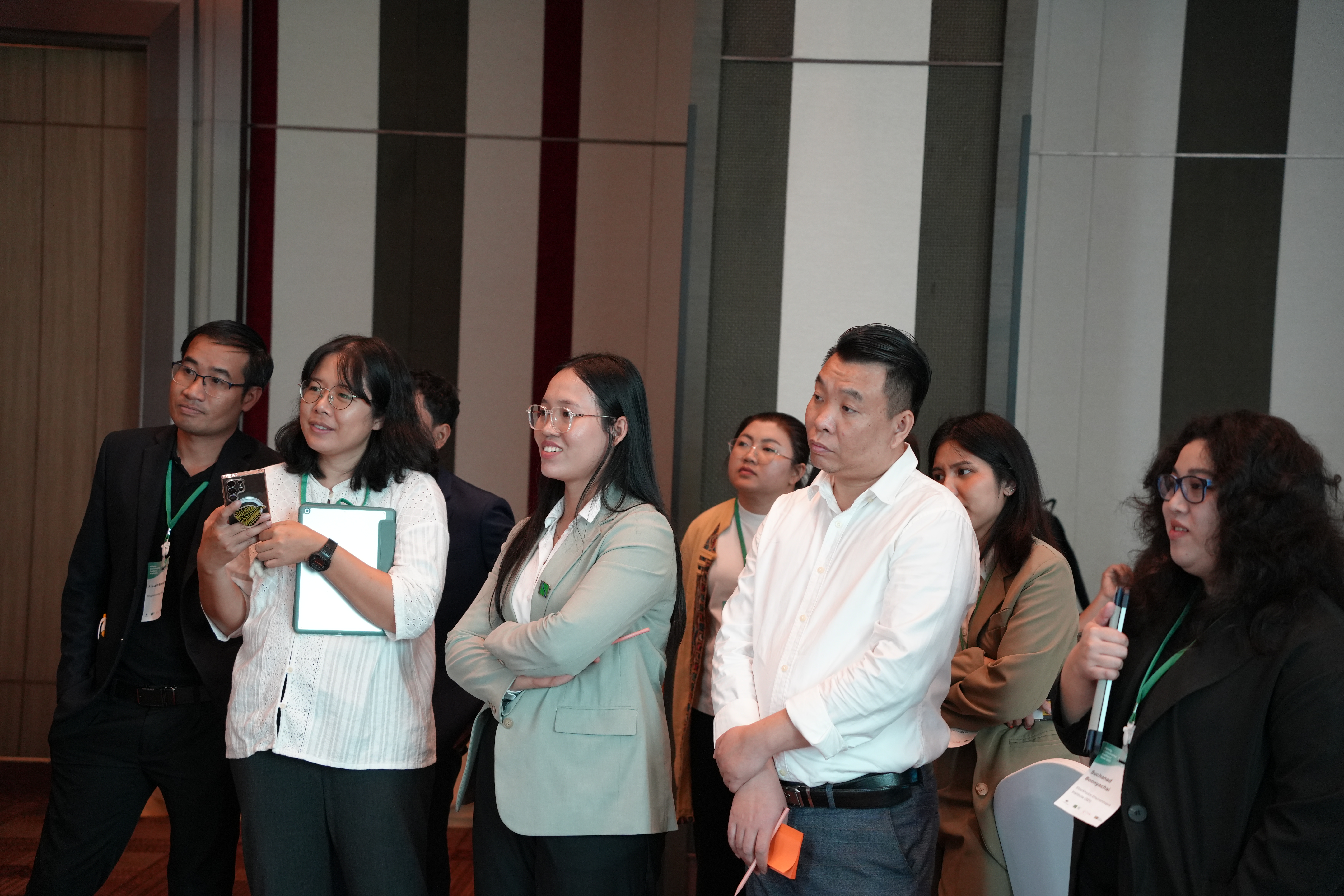
MTT fellows from Batch 5 at MTT Collaborative Space. Photo: Phuthita Dokput.
Bridging the divide
Panitda said:
Young researchers can act as translators between communities and policymakers, between technical expertise and lived realities, and between national and regional priorities. Their role is not just to participate in policy dialogues, but to reshape them, making them more inclusive, grounded, and collaborative across borders.
Indeed, the key role of these young professionals is to bridge divides and actively work to build environmental sustainability.
As Xayalak said:
Combining different perspectives will grow our knowledge and open multiple pathways to solve problems in the Mekong Region.
With the region facing increasingly urgent and complex environmental challenges, the ability of youth to translate research into inclusive solutions has never been more critical.
By claiming their space in high-level dialogues in the region, these dynamic and passionate youth in the MTT program are not merely observing the changes but also actively participating in efforts towards building a more sustainable and resilient future in the Mekong Region.
Info
This story is part of the following project
SUMERNET PLUS: Partnerships for a long-term climate-resilient Mekong
Topic
Country
Related people
You might be interested in
-
Call For SUMERNET PLUS “Scoping Study Grants”: Deadline 31 October 2025
Two scoping study grants for identifying existing innovative solutions and policy demands in the Mekong Region.
![Call For SUMERNET PLUS “Scoping Study Grants”: Deadline 31 October 2025]()
-
Mekong Environmental Resilience Week to explore solutions for inclusive Water-Energy-Climate futures for the Mekong Region during 18-20 November in Bangkok
Mekong Environmental Resilience Week 2025 aims to bring knowledge, collaboration and partnerships to create a more climate-resilient future for the Mekong Region.
![Mekong Environmental Resilience Week to explore solutions for inclusive Water-Energy-Climate futures for the Mekong Region during 18-20 November in Bangkok]()
-
Call for Programme External Consultants for SUMERNET PLUS Programme: Deadline 7 January 2026
This is an open call to recruit several external consultant positions for SUMERNET PLUS.
![Call for Programme External Consultants for SUMERNET PLUS Programme: Deadline 7 January 2026]()

 Read more about SUMERNET
