From inclusive research to policy impact: Shaping the next generation of Mekong researchers
This piece reflects on the Final Program Evaluation and Learning Workshop and MTT Fellows Forum under the Mekong Thought Leadership and Think Tanks Network (MTT) Program supported by the Australian Government held in Bangkok on 4-5 June 2026.
 By Thein Dollar
-
Jul 24, 2026
By Thein Dollar
-
Jul 24, 2026
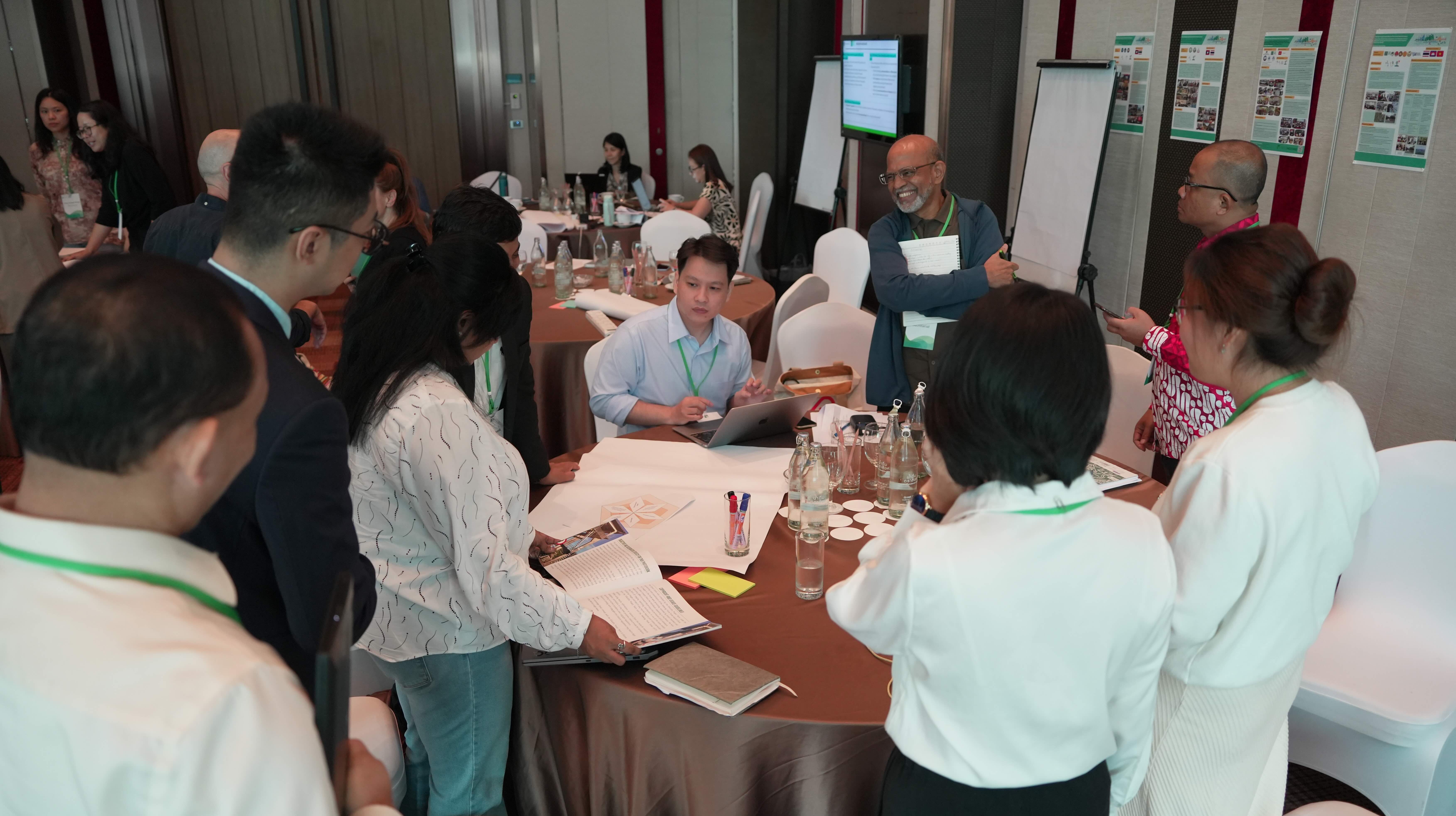
The recently held Final Program Evaluation and Learning Workshop and MTT Fellow Forum served as a platform for reflection, learning, and dialogue among MTT project grantees, fellows, advisors, evaluators, the Australian Department of Foreign Affairs and Trade (DFAT), and other stakeholders in the region.
Participants shared the program’s achievements, challenges, and lessons learned while exploring how inclusive research practices, meaningful stakeholder engagement, and stronger research–policy connections can drive more effective policy outcomes. Through plenary sessions, breakout groups, and presentations, the forum underscored the significant role of emerging researchers in shaping the future of evidence-based policymaking in the Mekong region.
Why inclusive research matters?
Discussions in the forum highlighted the importance of inclusive research. The sessions on Gender Equality, Disability, and Social Inclusion (GEDSI) emphasized the importance of rethinking women and persons with disabilities not as vulnerable groups but as agents of change who can actively shape policy outcomes, research, and decision-making.
One participant from GS4Infra—Building Resilient Water-Energy-Climate Infrastructures for All shared a significant impact from their projects: incorporating gender equality, disability, and social inclusion (GEDSI) principles in policy implementation has advanced women’s leadership, built global networks for research and policy participation, and helped to restructure local governance to allow more women as community leaders. They attributed this success to co-ownership, respect for local knowledge, culturally appropriate communication, and teamwork grounded in shared goals and mutual benefits.
While the MTT program has integrated GEDSI, including gender-balanced research teams, inclusion of women and minority voices, and gender-sensitive data collection, greater efforts are still needed to strengthen community participation, policy implementation, and cross-sector collaboration. Chayanis Krittasudthacheewa, Deputy Director of SEI Asia, said,
In the MTT program, we completed nearly every GEDSI requirement. Gender had a seat at the table, and its voice was heard. But what’s beyond that? We must continue pushing for meaningful and balanced engagement.
To achieve lasting inclusive impact, stronger partnerships among governments, communities, and development stakeholders are essential.
The forum also focused on the importance of co-production of knowledge where researchers, communities, policymakers, and other private stakeholders can coordinate together throughout the research. Across all discussion groups, the co-production of knowledge was seen as a major success of MTT. By promoting collaborative learning through research papers, policy briefs, participatory research, cross-country collaboration, and translation of materials into local languages, MTT has generated. These efforts have resulted in locally based, practically applicable information.
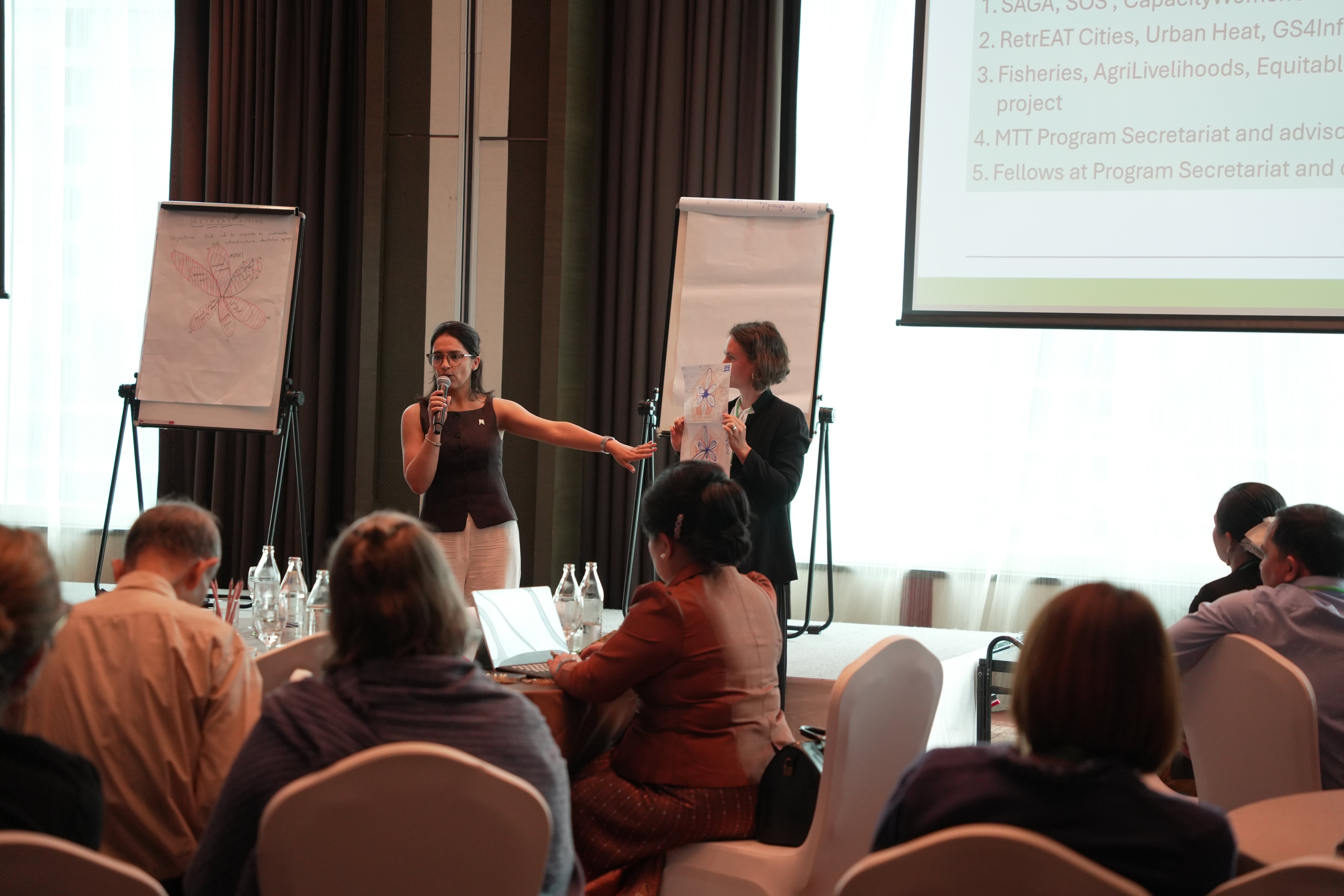
Photo: Noraset Kunjara Na Ayudhya / SEI Asia
Building the next generation of policy researchers
Through the MTT program, SEI Asia provided fellowship opportunities to young professionals, offering them significant learning experiences, academic exposure, and practical skills. The fellowship enhanced their expertise, equipping them with the skills, confidence, and networks to support career transitions and career prospects. Vo Quoc Thanh, an MTT fellow from Vietnam, said:
The MTT Fellowship gave me a new mindset. It's something I'll carry into my future work, and I'm committed to supporting future fellows by sharing what I've learned.
The MTT forum has become a platform for these young professionals to share their expectations and outline their future contributions. The Pro-Action Café, one of the most engaging discussions among young fellows, emphasized the value of strengthening research skills and expanding professional networks.
Most young fellows demonstrated a strong commitment to evidence-informed policymaking, contributing to policy formation at both national and international levels. Nittayapond Nipatsant, an MTT fellow from Thailand, stated,
We may not be able to change the world alone, but we can each contribute to making it better. The MTT Fellowship is an investment in ecosystem-level learning—where individual actions grow into collective impact.
They reaffirmed their position as a bridge between policymakers and research institutions, continuing to support sustainable water management, wetland conservation, and biodiversity programs throughout the Mekong Region.
From research to policy: what makes evidence matter?
The MTT program has delivered significant policy outcomes. During the breakout discussion, “From Scientific Evidence to Impact: What Moved the Needle on Policy,” the Solutions and Opportunities in managing water Storage (SOS) project team showed how evidence-based engagement and multi-stakeholder collaboration can shape policy agendas at both community and regional levels.
Through reliable dialogue and data sharing, disaster risk reduction was successfully integrated into cross-border discussions, focusing on broader economic and social considerations. The project also improved transparency in water management. The team noted that over 20 hydropower dams in the Mekong Region are now providing data through the Mekong River Commission (MRC) framework. Apart from giving policymakers reliable and timely information, this exchange of hydropower data also contributes to better regional cooperation on water governance and disaster management. Data sharing also enhances accountability among the different groups using and managing transboundary water resources in the Mekong Basin.
This achievement offers an important lesson for future projects: research becomes powerful when it is effectively communicated, embedded within governance frameworks, and supported by collaborations among researchers, policymakers, and communities. Building trust, improving collaboration, and addressing real-world needs can lead to better outcomes for lasting policy change in the Mekong Region.
Together, shaping the future
The MTT program is showing that meaningful policy change begins with inclusive and collaborative research. As the Mekong Region faces increasingly complex challenges in climate, energy, and development, researchers, policy partners, and communities all have critical roles to play in seeking evidence, facilitating dialogue, fostering collaborations, and amplifying underrepresented voices.
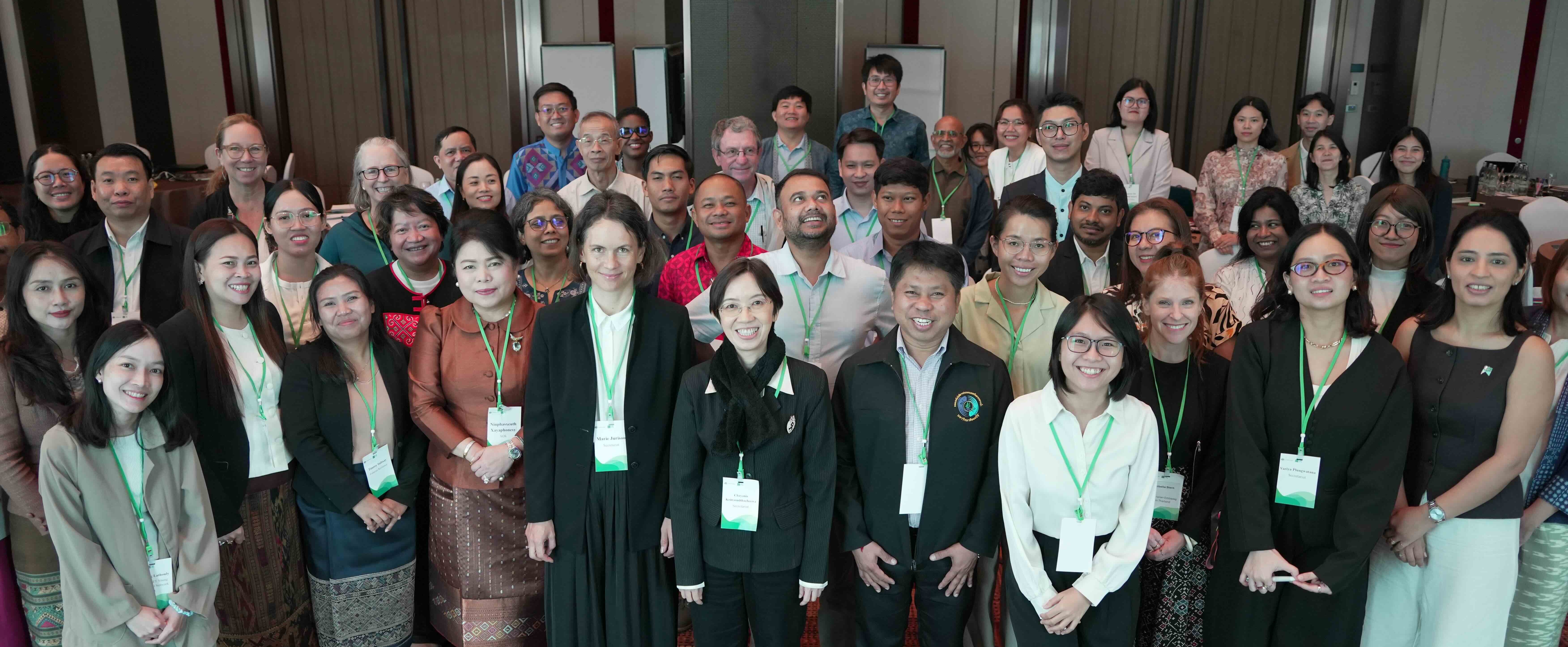
Photo: Noraset Kunjara Na Ayudhya / SEI Asia
-------------------------
This piece reflects on the Final Program Evaluation and Learning Workshop and MTT Fellows Forum under the Mekong Thought Leadership and Think Tanks Network (MTT) Program supported by the Australian Government held in Bangkok on 4-5 June 2026.
The MTT Program brings together research and policy organizations across the Mekong region to strengthen evidence-informed policymaking on issues related to the water-energy-climate nexus.
Info
This story is part of the following project
Mekong Thought Leadership and Think Tanks Network
Topic
Country
Related people


You might be interested in
-
Grants open for research linking to policy action under Mekong Thought Leadership and Think Tanks Network Program
Mekong Thought Leadership and Think Tanks (MTT) Network Program calls for applications to its research-to-policy grants supporting evidence-based research that connects to practical solutions to challenges in the water-energy-climate nexus.
![Grants open for research linking to policy action under Mekong Thought Leadership and Think Tanks Network Program]()
-
Now open: fellowship opportunities under Mekong Thought Leadership and Think Tanks Program
MTT Program is opening a call for fellowships to be hosted in Cambodia, Lao PDR, Thailand, and Vietnam. The Program will award up to 13 high-quality entry- or mid-level professionals of all genders who are Mekong citizens.
![Now open: fellowship opportunities under Mekong Thought Leadership and Think Tanks Program]()
-
Call for 3rd batch applications: fellowship opportunities under Mekong Thought Leadership and Think Tanks Program
MTT Program is opening a call for fellowships to be hosted in Cambodia, Lao PDR, Thailand, and Vietnam. The Program will award up to 13 high-quality entry- or mid-level professionals of all genders who are Mekong citizens.
![Call for 3rd batch applications: fellowship opportunities under Mekong Thought Leadership and Think Tanks Program]()



 Read more about SUMERNET
