How two decades of data sharing enables water collaboration in the Lancang-Mekong Region
This blog highlights the celebration of the 10th anniversary of Lancang-Mekong Cooperation, the Mekong-Lancang Cooperation (MLC) Week 2026 in Bangkok and reflected how far the region has envisioned their future directions.
 By Parichat Pinsri
-
May 15, 2026
By Parichat Pinsri
-
May 15, 2026
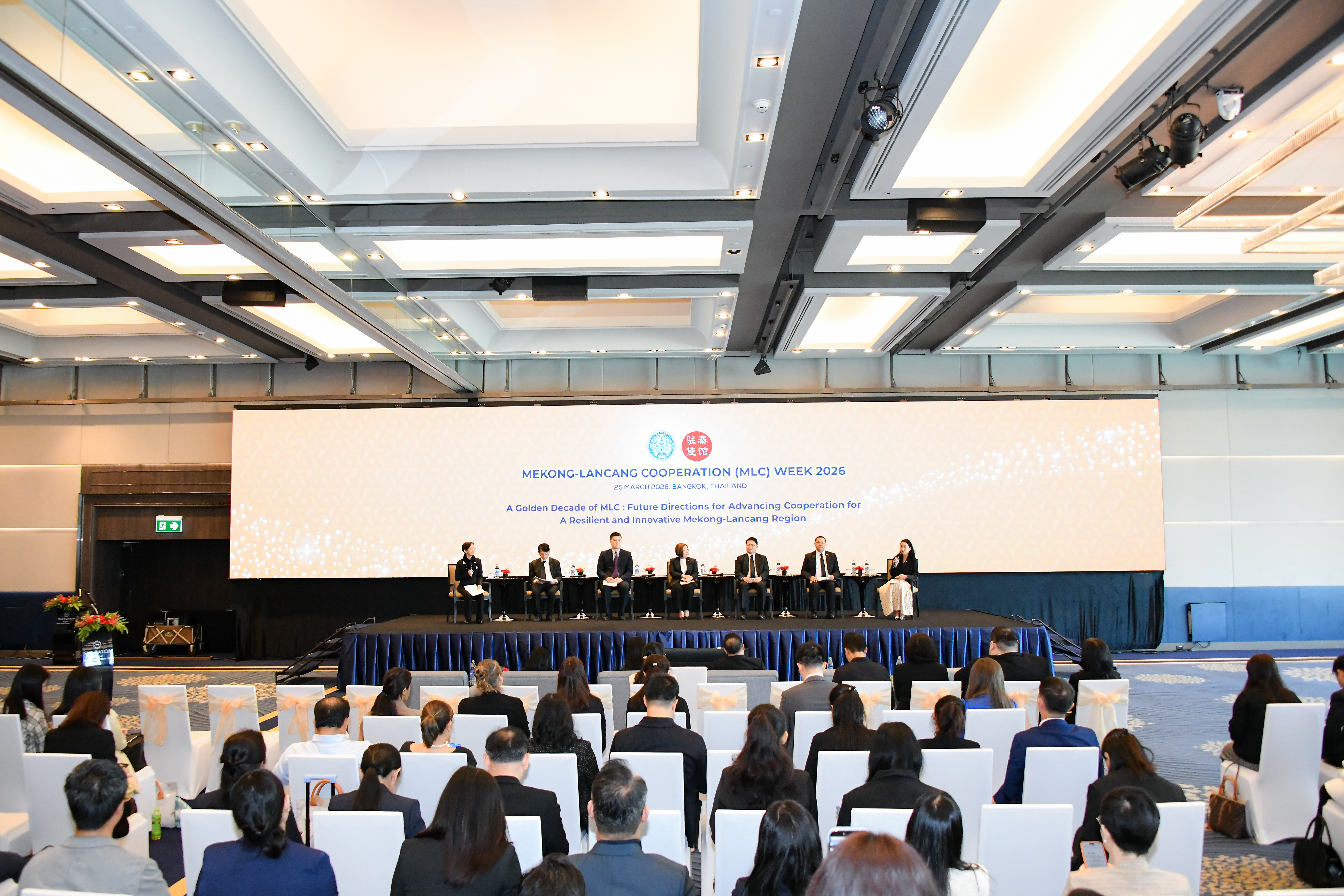
In celebration of the 10th anniversary of Lancang-Mekong Cooperation, the Mekong-Lancang Cooperation (MLC) Week 2026 was held in Bangkok on the 25 March 2026. SEI facilitated dialogues, to reflect how far the region has come together and to envision their future directions.
During the discussion, sharing hydrological data stood out as one of the key achievements in water governance of the Lancang-Mekong Cooperation. Many panelists repeatedly emphasized its importance and progress during the session “A Golden Decade of MLC: Future Directions for Advancing Cooperation for a Resilient and Innovative Mekong-Lancang Region.”
LMC’s achievement in water governance
When asked to select only one achievement of Lancang-Mekong cooperation over the past 10 years, three out of six panelist mentioned hydrological data sharing.
“Sharing data could help us do better forecasting and monitoring on water level and rainfall for the sustainable development and management of Mekong,” said H.E. Miss Bussadee Santipitaks, Chief Executive Officer, Mekong River Commission Secretariat.
She added that the cooperation has enabled technical experts to work together, which is the essential part of the upstream-downstream cooperation.
Data also plays an important role in water planning, especially in early-warning system for disaster preparedness as highlighted by Dr. Winai Wangpimool, Director of Foreign Affairs Division, Office of National Water Resources of Thailand.
Early warning systems are important in a transboundary river basin like the Lancang-Mekong where upstream–downstream dynamics require coordination of data and agencies. Reliable data is needed to monitor the state of water, track trends, and to forecast rising or falling water levels.
Data is the basic infrastructure for water management.
as emphasized by Associate Professor Dr. Sucharit Koontanakulvong, Research Program Director from the National Research Council of Thailand. He explained further that before moving toward “Shared River and Shared Future”, the foundation lies in joint management and planning, which is grounded in data sharing.
Progress over time
Hydrological data sharing within the lower Mekong region has been established since 2002 under the Mekong River Commission-Information System (MRC-IS). Data and information are exchanged among member countries to support the implementation of the Mekong River Commission activities and the Mekong Agreement, covering areas such as water resources, flood and drought management and mitigation, and infrastructure.
Cooperation between the Mekong River Commission and China began in 1996, with initial data sharing starting in 2002. Since then, daily upstream data on river flow and rainfall during the wet season have been shared among the Lower Mekong Basin countries. In 2013, dry season data were also provided during drought emergencies. This arrangement expanded to year-round data sharing in 2020. This is a key highlight of progress made in data-sharing since year-round data captures the full hydrological cycle, which improves understanding of patterns and anomalies.
Some years, we can see floods in the dry season, and some years, we see drought in the wet season.
said Dr. Winai. The year-round data provide trends in flow patterns which can improve water management.
This step in data sharing reflects growing trust and cooperation. Data sharing among institutions facilitates collaboration such as establishment of joint working groups, collaborative modelling, and development of shared early warning systems.
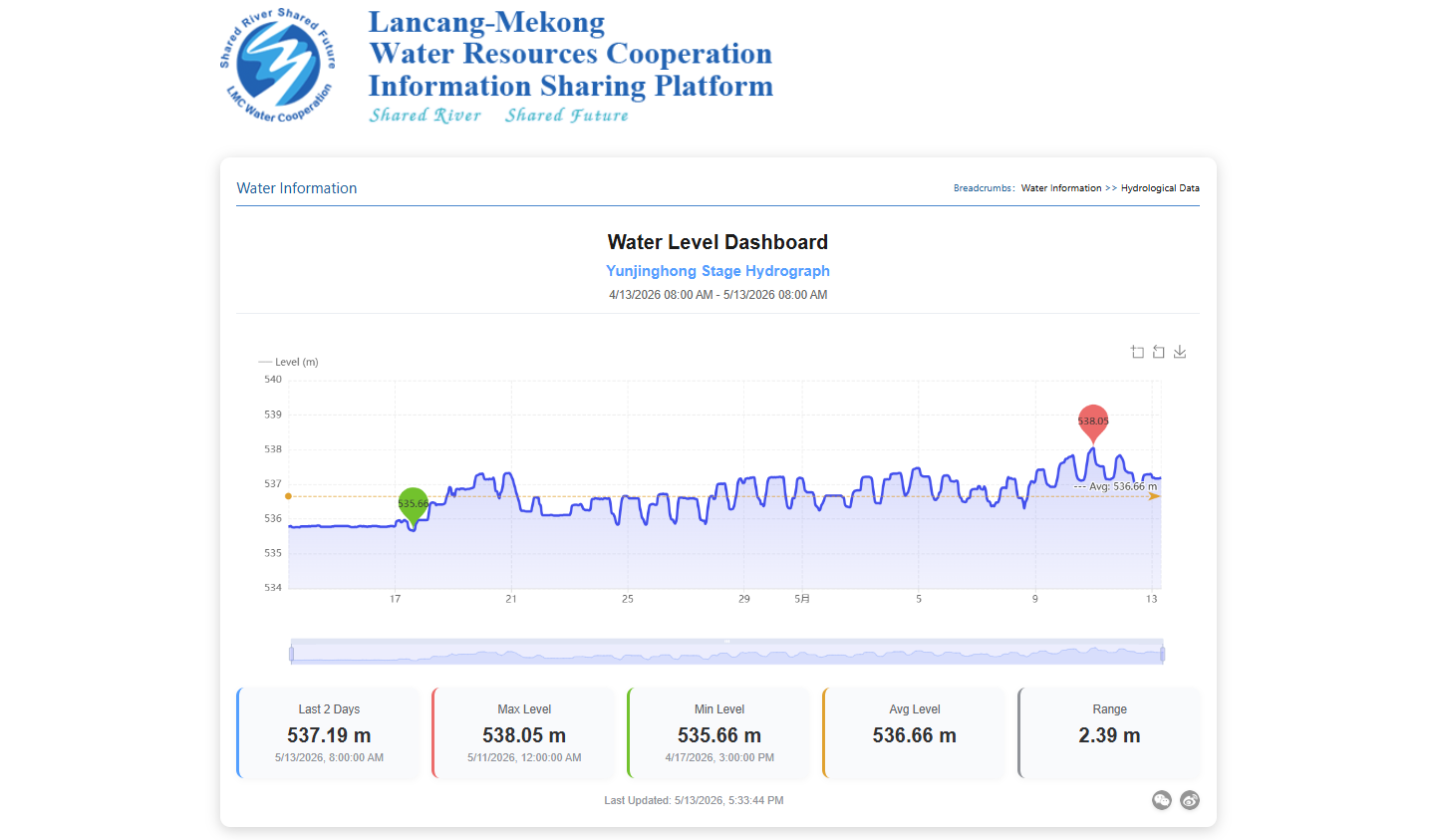
Water level dashboard shared on the LMC Water Cooperation website.
Photo: Lancang-Mekong Water Resources Cooperation Information Sharing Platform.
The growing trust is also reflected in the sharing of data with the public, which is particularly critical for people living in riparian areas, who are often the most vulnerable to weather extremes and changes in river levels. Open-access data not only creates trust with the public but also enables local action, leading to prompt response to water situations such as floods and droughts.
More than just data sharing needed for good water governance
Data sharing is the foundation of good water governance, but it does not end there.
Miss Busadee states that a core part of their work is the sharing of modelling tools. This supports better decision-making and improves the reliability of decision-support systems.
To achieve this, the tools need to be grounded in science and evidence. These systems then become stronger when accurate and real-time data is provided. This would help improve assessing scenarios and early warning system for disaster risks preparedness.
Strengthening data sharing and harmonizing modelling approaches can help build a common understanding across sectors. Ultimately, this contributes to trust and confidence, supporting stronger collaboration and enabling communities to become more resilient while sustaining their livelihoods.
 Read more about SUMERNET
