Protecting the Mekong Basin: Youth voices from the Mekong-Lancang Cooperation dialogue
This article highlights a dialogue 'Mekong-Lancang for Youth Leadership: Empowering the Next Decade of Cooperation' as a crucial platform for young people to reflect on their perspectives and to co-design the direction of development for the Mekong Region.
 By Nittayapond Nipatsant
-
Jun 2, 2026
By Nittayapond Nipatsant
-
Jun 2, 2026
The Mekong River is facing multiple stressors: infrastructure development, climate change, the degradation of ecosystems, and the complexities of the regional political context.
Amid these challenges, the voices of youth are gradually growing louder, not only as those affected, but also as key actors in working to restore the ecology of the Mekong River Basin.
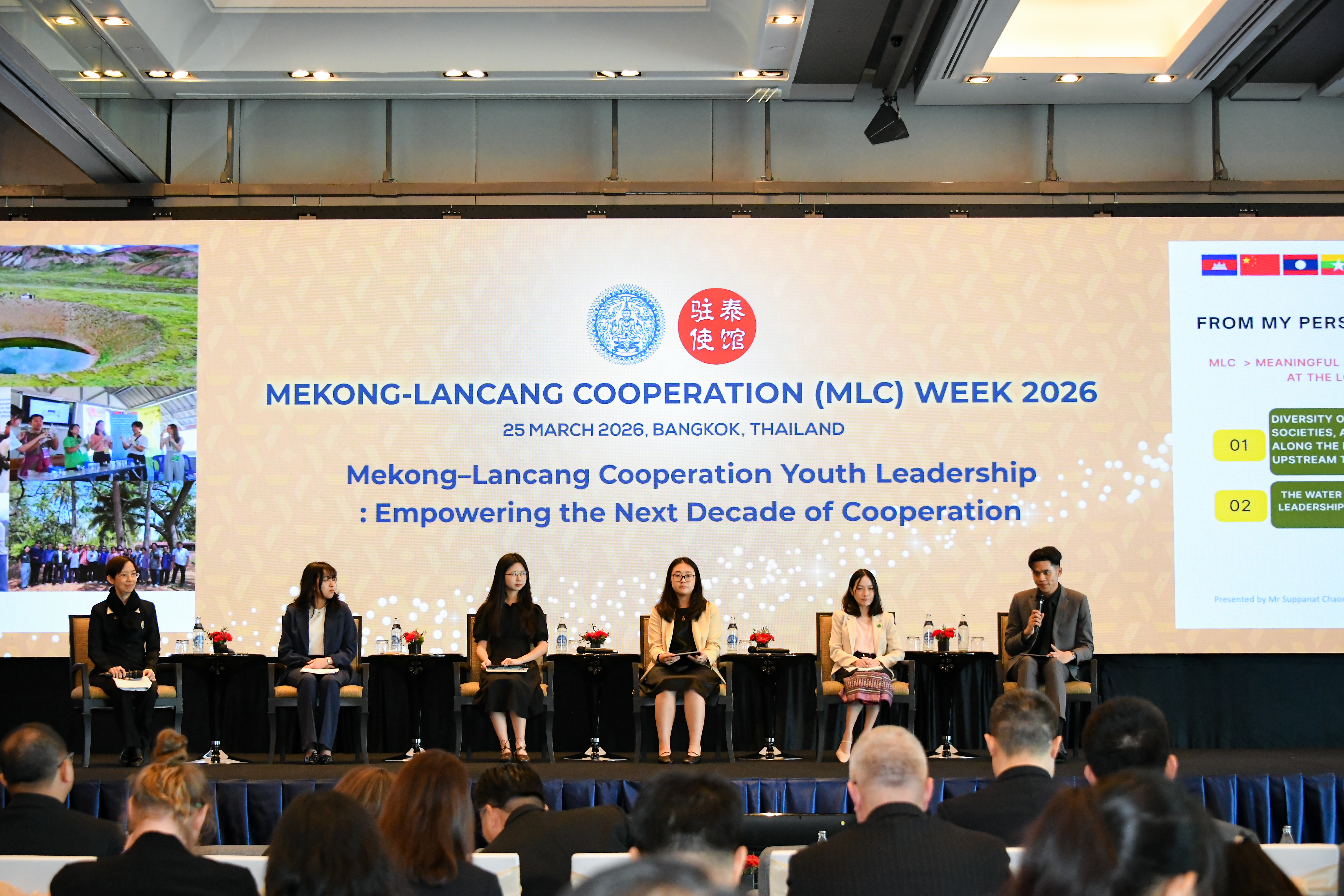
On 25th March 2026, the Ministry of Foreign Affairs of Thailand organized a dialogue 'Mekong-Lancang for Youth Leadership: Empowering the Next Decade of Cooperation'. This dialogue was not only a platform for exchanging ideas among youth in the region, but also a crucial space for young people to reflect on their perspectives, experiences and hopes for the future of the Mekong Basin, and to co-design the direction of development in the next decade.
Youth don’t lack a ‘voice’, they need ‘facilitator’
Buanong Lathouly, a youth representative from Laos, reflects on the voices of young people from the Mekong Basin. She said that youth do not lack a voice as many believe. On the contrary, their voices are clear, strong, and full of determination to work together to solve the environmental issues facing the region. What the youth lack is a pathway to ensure the continued flow of their collaborative efforts. Youth cooperation groups in the region currently lack a space or mechanism that allows them to develop ideas, experiment, take action and connect effectively.
In this context, existing regional mechanisms, such as the Mekong-Lancang Cooperation, have significant potential to fill these gaps. This is not merely about providing occasional forums for youth to express their opinions, but about creating a continuous space where youth can co-design solutions, implement them, and grow together in the long term.
Buanong Lathouly said:
I have realized that there is already a strong interest from the youth to work together on environmental issues. But this also needs to be facilitated. The foundation is there now. It’s just we need to talk about how to make this continuously. How to make it more connected, how do we embed this into a sustainable system?
Youth digital think tank: From classrooms to learning spaces
Zhirong Lian, a youth representative from China, who made a simple yet powerful suggestion: The creation of a Youth Digital Think Tank. This could serve as a space where youth from the Mekong-Lancang Region meet, not just to talk but to continuously think, write, exchange, and design policies together.
A Digital Think Tank platform is more than just a tool; it’s a new space for participation that connects the knowledge space with the real world, links the voices of youth from the community to the regional level, and ensures that policy proposals are not just documents, but the result of ongoing collaboration.
Zhirong Lian said:
We need a digital platform where youth, scholars, activists or entrepreneurs can regularly co-author and review policy recommendations and share their local insights, to ensure that youth voices are constantly being heard by the policymakers, not just during annual forums.
From workshops to nurturing ‘river basin guardians’
The young people wanted a rethink on how youth development is often done in the short term like weekend workshops followed by certificates and then everyone heads home. But youth believe that capacity building takes time. It is a long-term nurturing process that gives young people the time and continuity they need to see themselves as "River Basin Guardians".
Therefore, cultivating Mekong Literacy should not be limited to short-term projects but should be integrated into the core of the region’s education system, from geography to science classes.
This will ensure that the younger generation sees the Mekong Basin as a set of vital and complex ecosystems, one whose value lies beyond the perspective of any single generation.
Youth participation groups have already emerged in the region, most still target university students or those beginning their careers. The next crucial step is to expand outreach to the school level, so that younger generations can be instilled with environmental knowledge and perspectives from an early age and carry those perspectives throughout their lives.
The Mekong-Lancang cooperation mechanisms already have a strong foundation for this step, including mentoring systems, exchange programs, and practical training. What is needed now is the willingness to build upon and expand these efforts further.
 Read more about SUMERNET
