Podcast – Vietnam’s renewable energy transition and the private sector
Vietnam has ambitious goals for renewable energy transition but achieving them requires more than just solar panels and wind turbines. In this podcast episode, Loan Luong from AMPERES shows that Vietnam’s energy transition needs to get two things in place: battery storage systems and private sector investment.

 By
By
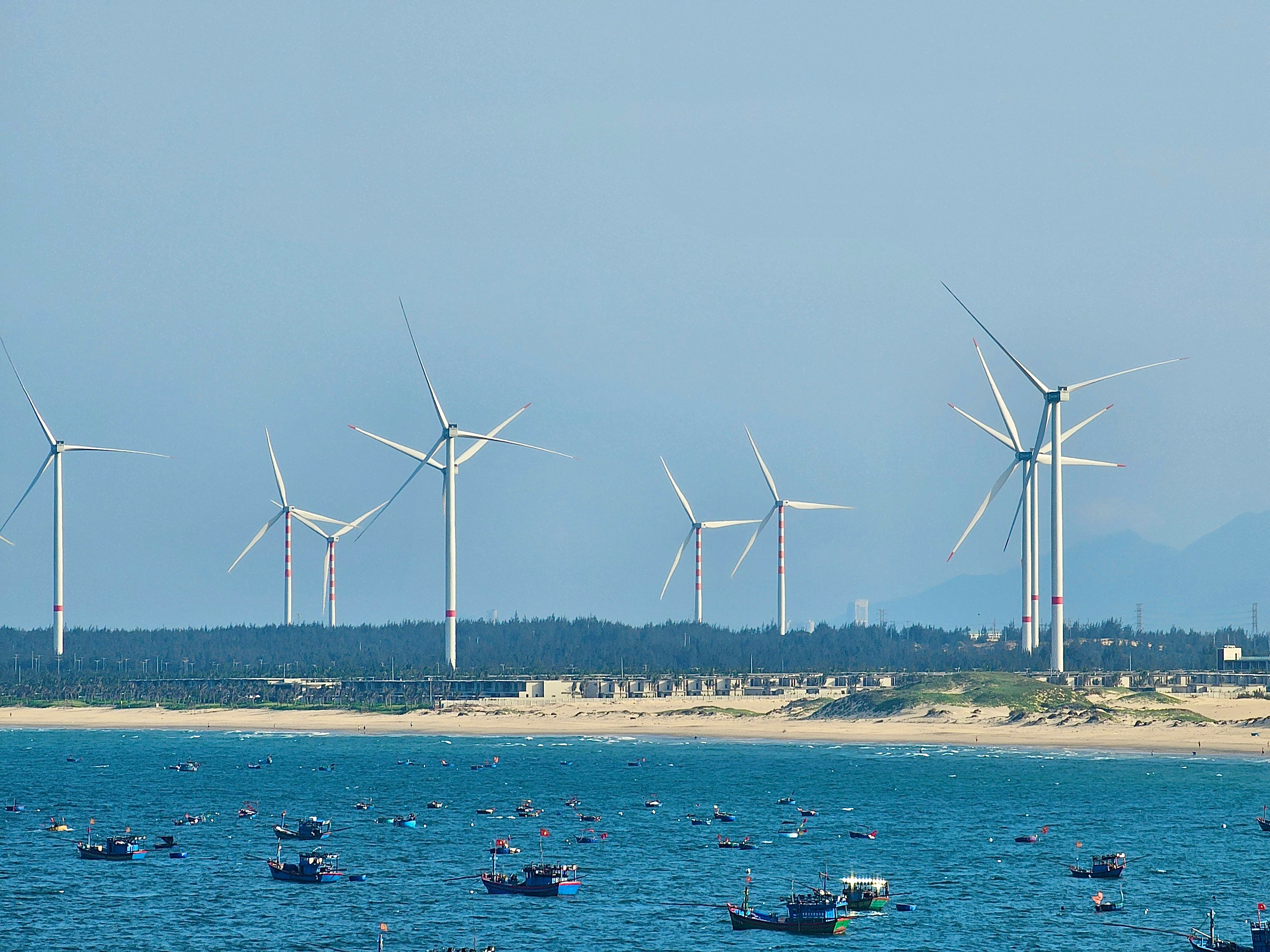
Vietnam's power system is expected to double in size by 2030 and grow tenfold by 2050. Vietnam plans to make renewables roughly a third of that energy mix.
In this podcast episode, Loan Luong of AMPERES looks at the intersection of policy and practice in Vietnam’s energy transition. Loan explains how Vietnam’s ambitions for renewable energy will depend on the government putting systems in place to bring in private businesses, investors, and innovators and upgrade its energy storage and battery systems.
Looking to the future: Battery storage systems
Loan emphasised that energy is the backbone of the nation’s economic growth. Vietnam posted 8% GDP growth in 2025 and is now aiming for double-digit growth as a target that holds through 2030. This kind of economic ambition needs a matching supply of electricity.
Unlike coal or gas, renewable sources are inherently unpredictable. Solar generation peaks during daylight hours, while evening demand remains high. Wind power fluctuates with weather conditions. This mismatch between supply and demand creates reliability concerns that storage systems can address.
Loan said:
Traditional power source like coals, gases can be switched on when energy is needed. But for renewables, there are many variables. Solar depends on the sun; wind depends on the weather. You can't command them to produce during evening peak. So, that's where battery storage comes in.
Private sector driving the energy transition
Vietnam’s ambitious plans for the renewable energy transition began in 2017, and by 2023, the country had become Southeast Asia’s largest solar producer. Notably, domestic private investors contributed 58% of the total investment, with joint ventures adding 27%. Private financing accounted for more than 80% of the sector’s rapid expansion.
The initial phase focused on building capacity through installing solar panels and wind turbines. The next phase is aimed at ensuring integration and reliability: making renewable energy reliable through storage systems and flexible energy management.
Loan said:
Phase one was about building capacity, putting solar panel and wind turbine. Now, we're entering the next phase, integration and facilitating the private sector to step up in a new way.
Vietnam’s policy pathways forward
Previously, feed-in tariffs encouraged the private sector to sell renewable energy to the Vietnam Electricity (EVN) power grid. Since that plan ended in 2021, investment in the renewable energy sector has slowed. The challenge now is creating clear revenue models for the private sector using battery storage systems and fostering a commercial environment to attract private investments.
Loan explained that research by Amperes focused on how large-scale industrial parks and manufacturers can be cost-effective as it requires economies of scale to implement before branching out to smaller businesses. The research study showed that investments in tailor-made renewable energy models and battery storage systems can prove cost effective for factories in industrial parks.
She said that Vietnam’s trials for virtual powerplants models allow physical assets to both consume and feed electricity to the grid and ensure energy security. The pilot projects have ended in 2023, but scaling up needs further private sector investments.
Loan concluded on a positive note:
Vietnam has the ambition and the momentum. The question is whether Vietnam can create the enabling environment: regulation, digital infrastructure, skills and the mindset. I believe Vietnam can.
===============================================
This episode was co-initiated and supported by Amperes.
Episode host: Rajesh Daniel
Sound editing: Visakone Thammavong, Variya Plungwatana
Series producers: Rajesh Daniel, Variya Plungwatana, Visakone Thammavong
Download the transcript using the link below. Links for additional resources and reading are also included in the transcript.
Listen to this episode on available channels:
Info
This story is part of the following project
SUMERNET 4 All: Engaging with water insecurity in the Mekong Region
Topic
Country
Related people

You might be interested in
-
SUMERNET Vision Guide introducing the new phase "SUMERNET 4 All"
The new, revised "Vision Guide" for SUMERNET is now available. This vision guide presents an overview of SUMERNET - its origins and governance structure, background to the network, aims, key research areas, engagement with policy, and outreach products
![SUMERNET Vision Guide introducing the new phase "SUMERNET 4 All"]()
-
SUMERNET 4 All Call for Proposals on Joint Action
SUMERNET 4 All (S4A) provides financial support and technical assistance to consortia of researchers and boundary partners from the Mekong Region
![SUMERNET 4 All Call for Proposals on Joint Action]()
-
SUMERNET launches redesigned website to provide a fresh visual look and direction
SUMERNET is proud to announce the launch of our redesigned website to coincide with our new phase of work on addressing water insecurity in the Mekong Region.
![SUMERNET launches redesigned website to provide a fresh visual look and direction]()


 Read more about SUMERNET
